
Colorbond Fencing
Steel boundary and privacy fencing in a range of colours — low-maintenance, termite-proof and suited to coastal and hinterland homes.
Learn More →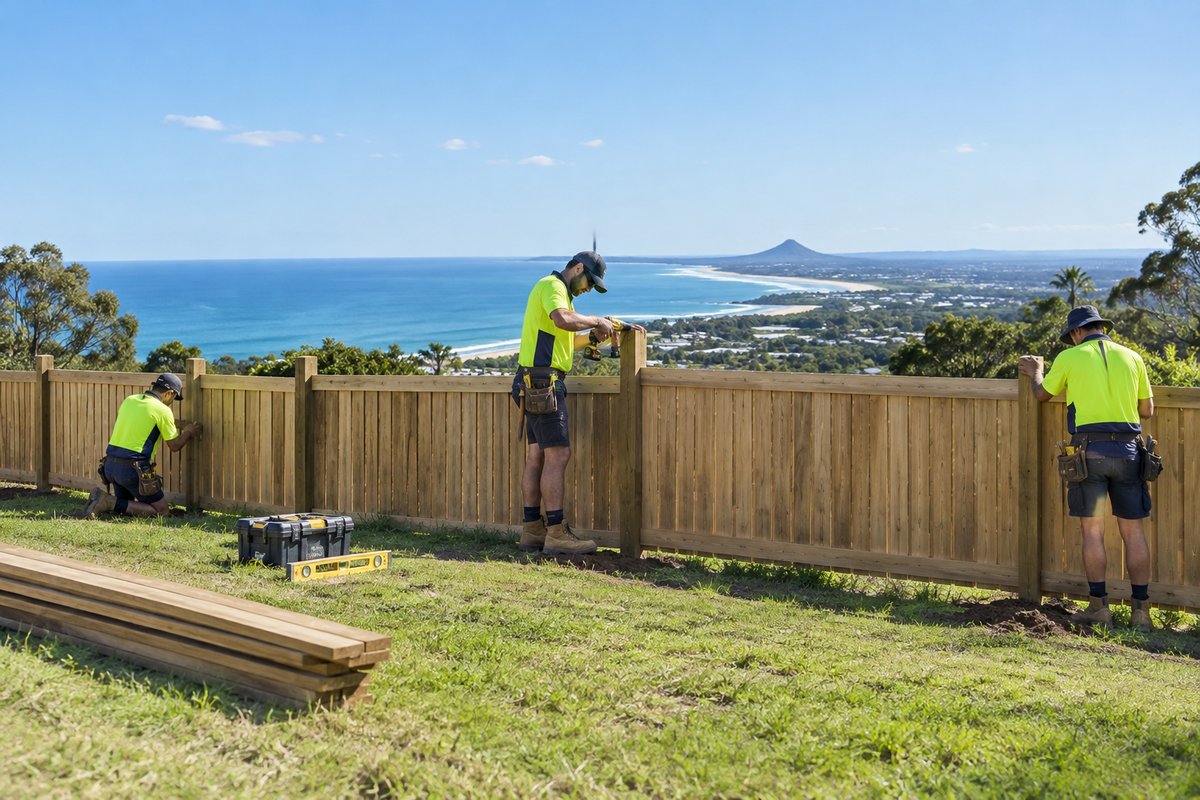
Paling, lap-and-cap, picket and hardwood timber fences for boundaries, front yards, acreage and privacy.
Request a Free Quote
A good timber fence starts below the ground. On the Sunshine Coast, we set treated pine or hardwood posts in concrete footings. We then fit the rails and palings with galvanised or stainless fixings, which hold up better in humid air and salt spray near the beach. Most of our timber work falls into three types: paling fences between neighbours, lapped and capped fences for extra privacy, and horizontal slat screens for front yards and courtyards. If your old fence is leaning after a wet summer, we pull out the old posts and footings properly rather than building around them.
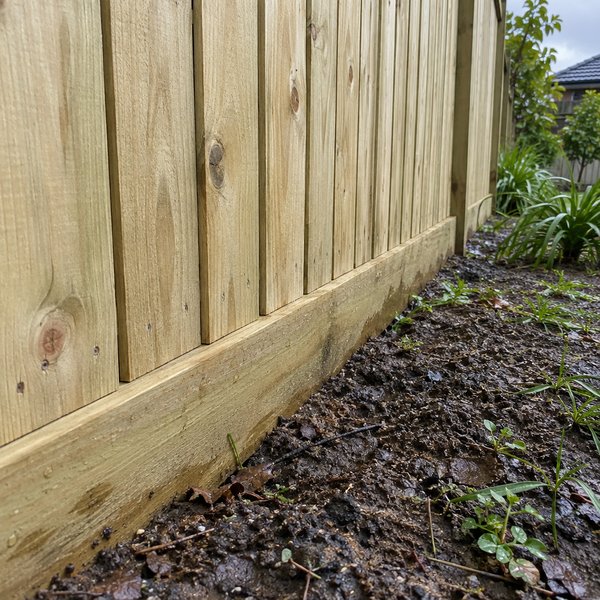
Our local climate is hard on timber. Long humid stretches and heavy summer downpours keep the base of a fence damp, and that is where rot and termites usually start. That's why we often fit a plinth board along the bottom to keep palings off the soil. We also match footing depth to the ground, from sandy coastal blocks around Caloundra and Coolum to heavier clay soils in the hinterland. Storm season brings strong gusts, so post spacing and rail size matter more here than in drier parts of the country.
Timber suits a lot of properties, but not every boundary. If you'd rather have a low-maintenance boundary on a new estate block, we can talk you through Colorbond fencing as well. A timber fence also pairs well with a matching pedestrian or driveway gate from our gates and automatic gates range. If your current fence only has a few rotten posts or loose palings, ask us about a repair before you commit to a full replacement.
From string line to capping rail, here's what happens on site.
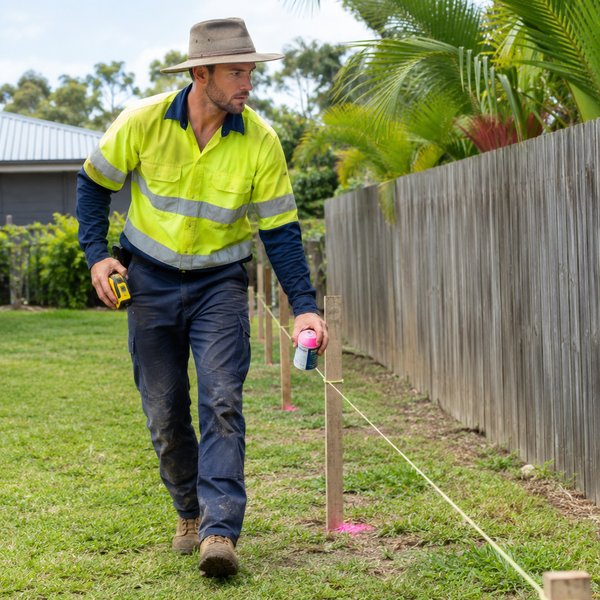
We walk the boundary with you, confirm the fence line against boundary pegs and run a string line from end to end. We mark every post position, note any slope, tree roots or rock, and check for underground services before we dig.
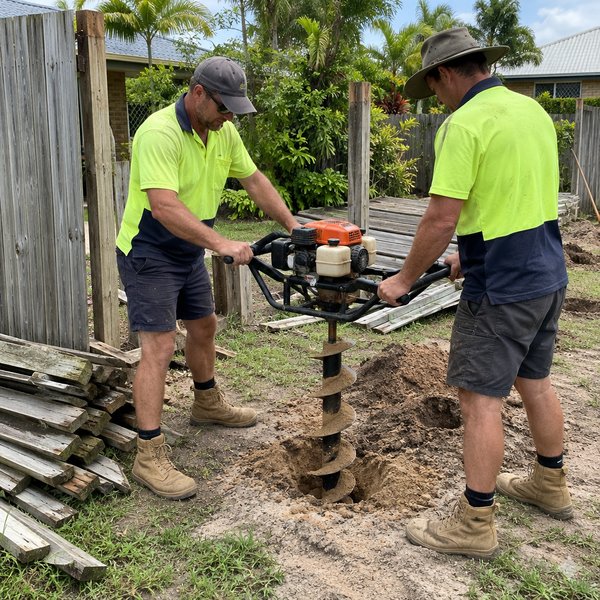
We pull down the old palings and rails, then dig out the old posts and their concrete so the new posts sit in clean ground. Post holes go in with an auger, and we adjust depth to suit sandy coastal soil or heavier clay.
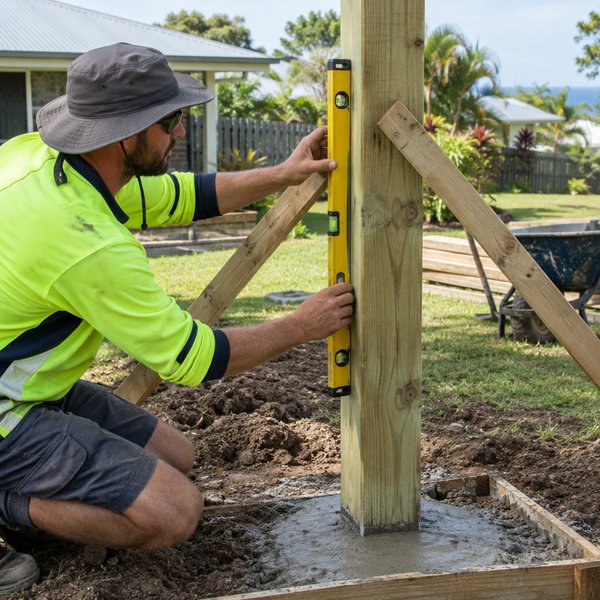
Each post is plumbed with a spirit level, braced and set in concrete, then left to firm up before any load goes on it. Once the posts are solid, we fix the rails level or follow the fall of the land on sloping blocks.
We fit the plinth board first, then nail or screw the palings to a consistent height with corrosion-resistant fixings. For lapped and capped fences we add the overlapping second layer and a capping rail, then clean up offcuts and leave the site tidy.
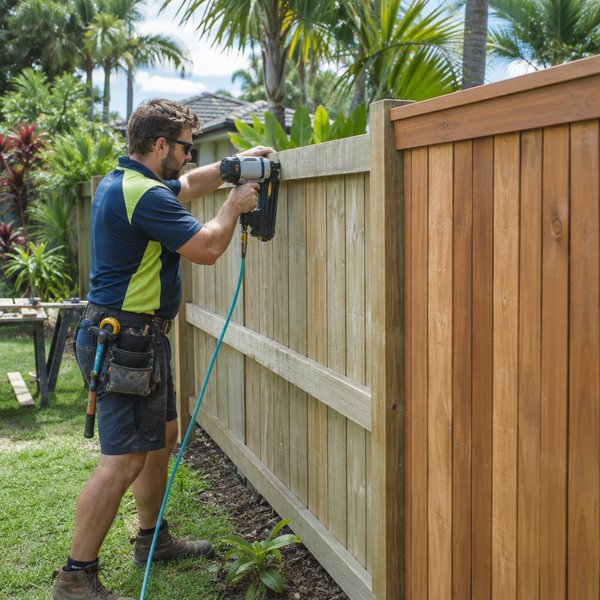
Privacy, a natural look and a fence that handles wet seasons and storm winds.
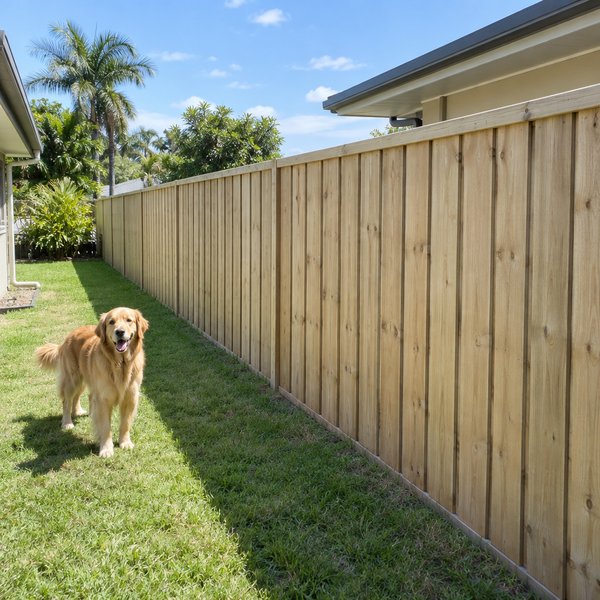
A lapped and capped fence closes the gaps between palings, so neighbours and passers-by can't see into your yard or pool area. Timber also softens a boundary and sits well against gardens, decks and Queenslander-style homes.
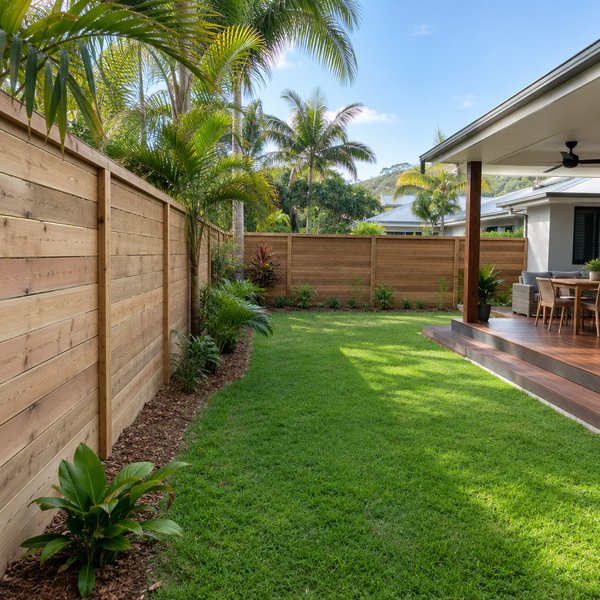
Lifting palings off the ground with a plinth board and choosing the right in-ground timber helps slow rot at the base, where most local fences fail first. You spend less time replacing rotten palings and propping up leaning sections after a wet summer.
Posts set plumb in solid concrete footings, with sensible spacing and properly fixed rails, keep the fence standing straight through gusty storm-season weather. A solid fence also keeps dogs and kids in and stops sagging gates and gaps from forming over time.
We dig different footings for sandy coastal blocks and heavy hinterland clay because they behave differently in the wet. That attention below ground keeps posts from leaning or heaving years down the track.
Near the beach, standard nails can rust and stain the timber. We use galvanised or stainless fixings where salt air and humidity call for them, so palings stay fixed and clean.
We also build Colorbond, aluminium slat and pool fencing, so we have no reason to push timber where it doesn't suit. If a repair will do the job, we'll tell you that too.
We remove old palings, rails, posts and concrete rather than leaving them buried along your boundary. Offcuts and spoil are cleaned up so you can use your yard straight away.
Common questions answered
Treated pine is the most common choice for paling fences because it is consistent and suited to in-ground use when rated for it. Hardwood is denser and often used for posts, plinths and feature screens where you want extra strength or a richer look. We'll talk through your budget, the look you want and how exposed the fence is to moisture before recommending a mix.
It depends on the timber, how the base is detailed, the soil drainage, termite activity and how often the fence gets oiled or stained. Fences with palings touching damp soil or sprinklers usually fail first at the bottom. A plinth board, good drainage and regular coating all help a timber fence last longer here.
The main factors are the length and height of the fence, the timber type, and the style, as lapped and capped uses more material than a single-sided paling fence. Removing an old fence, digging out old footings, sloping ground, rock, tree roots and tight side access all add work. We measure on site so your quote reflects your actual boundary.
Timing depends on the fence length, whether an old fence needs to come out, ground conditions and the weather. Concrete footings need time to firm up before we load the posts with rails and palings. Heavy rain can also pause digging, so we'll give you a realistic timeline once we've seen the site.
Under Queensland's dividing fence laws, neighbours generally share the cost of a sufficient dividing fence. It's best to agree on the style, height and cost split with your neighbour in writing before work starts. We're happy to provide a quote you can both review.
We provide Timber Fencing throughout the Sunshine Coast, QLD and surrounding suburbs.
Don't see your area? Contact us to check if we service your location!
View All Areas