
Pool Fencing
Frameless and semi-frameless glass, aluminium and tubular pool fencing and gates designed with Queensland pool safety requirements in mind.
Learn More →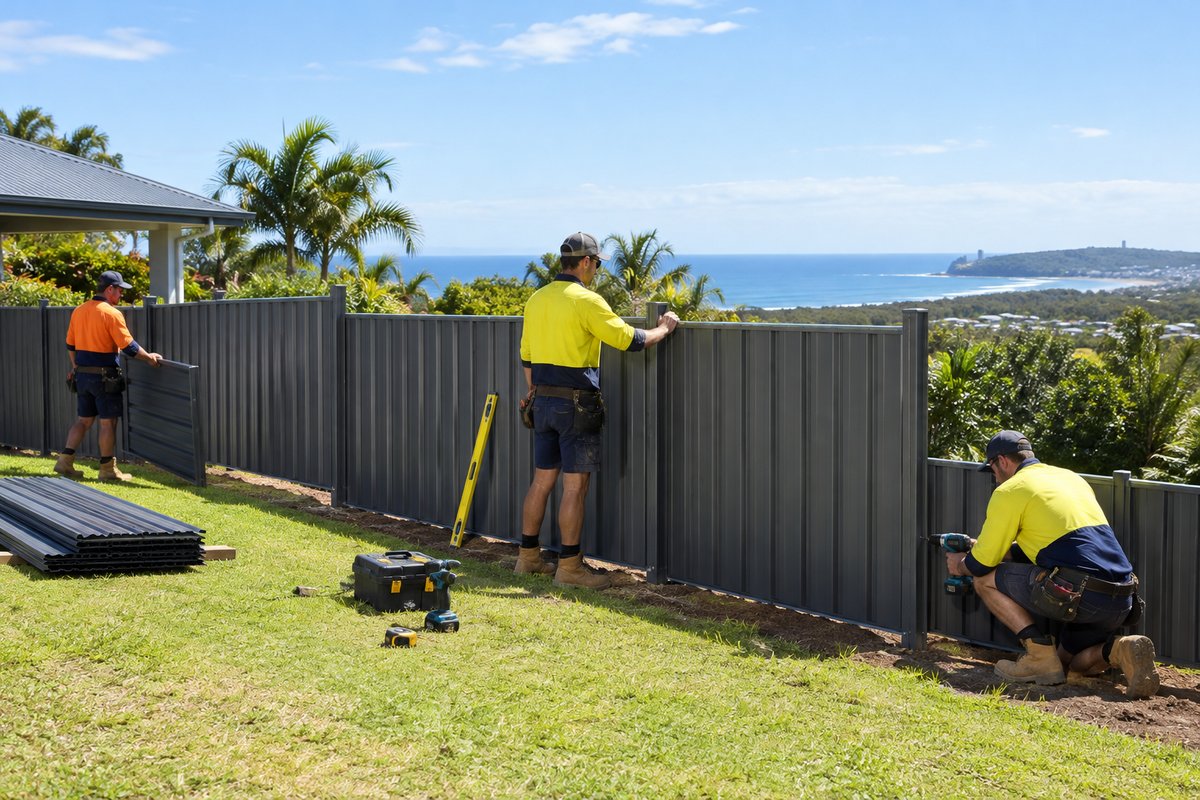
Steel boundary and privacy fencing in a range of colours — low-maintenance, termite-proof and suited to coastal and hinterland homes.
Request a Free Quote
A Colorbond fence is a simple system. Pre-painted steel sheets slot between top and bottom rails, held up by galvanised steel posts set in concrete. Most of the job happens below ground and at the cut edges, and that's where a fence either lasts or starts failing. We supply and install Colorbond fencing across the Sunshine Coast for new builds in growth estates, holiday homes and investment properties, and for homeowners pulling out a tired paling fence that termites and wet weather have already started on.
Local conditions shape how we build. Coastal suburbs often sit on loose, sandy soil, while hinterland blocks tend to be clay, rock or steep slopes. Each one changes how deep and wide we set the post footings. Heavy summer storms push hard against a solid steel fence, so we size the footings for the wind your site actually gets. We also crown the concrete at each post base so rain runs off instead of pooling against the steel. Close to the beach, salt air and humidity make cut edges and steel offcuts a real rust risk, which is why we clean every scrap of swarf off the panels before we leave.
Most boundary fences need a way through, so we can build matching single and double gates in the same steel and colour as your panels. If storm-season winds have bent a panel or snapped a rail, our fence repairs team can often fix the damaged bays without replacing the whole run. On sloping or terraced blocks, we step the panels and add concrete sleeper plinths, so you don't get gaps underneath for pets to squeeze through or soil to wash out.
From boundary set-out to the final swarf clean-up, here's what happens on site.
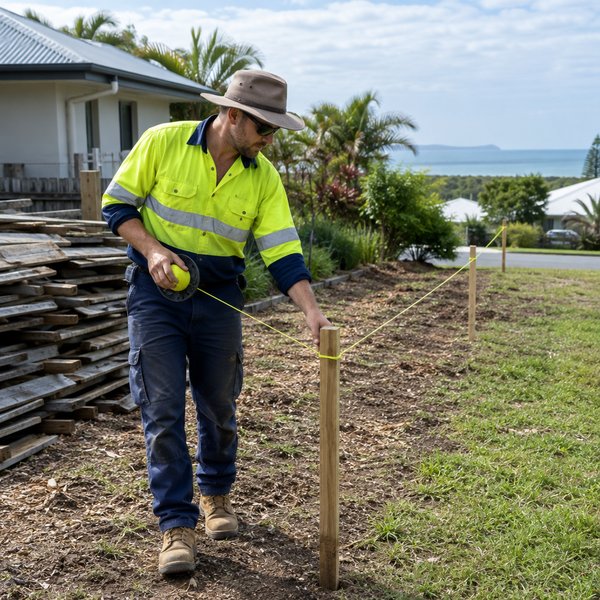
We confirm where the boundary runs, check for underground services and look at the slope, soil and drainage along the line. If an old paling or steel fence is in the way, we pull it out and take it away. Then we run a string line and mark every post position so the finished fence sits straight and evenly spaced.
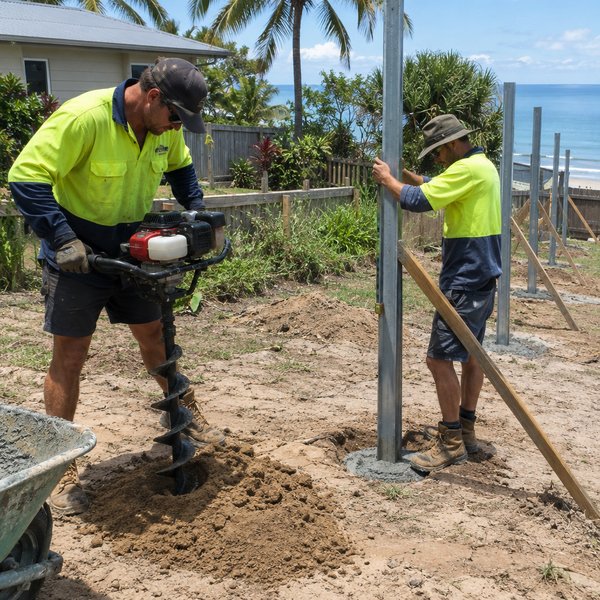
We auger the post holes to suit your soil, going wider or deeper in loose coastal sand and working around rock or clay in the hinterland. Each galvanised post is set plumb in concrete and braced while it cures. We shape the top of each footing so rainwater runs away from the post.
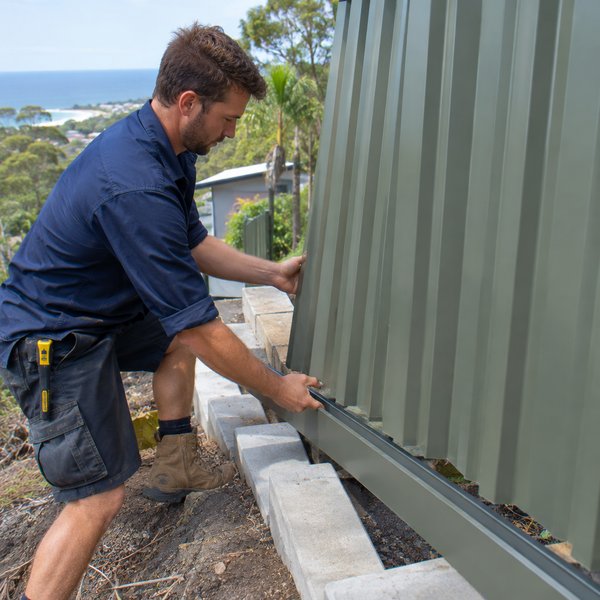
Once the posts are firm, we fit the bottom rail, slide the Colorbond sheets into place and lock them in with the top rail. On sloping ground we step each bay and install concrete sleepers underneath to close gaps and hold back soil. Any sheets that need trimming are cut with tools that limit hot sparks and edge damage.
We hang any gates, adjust hinges and latches, and check they swing and close cleanly. Then we brush and blow every metal filing off the panels, rails and ground, because left-behind swarf rusts fast in our humidity and stains the paint. We walk the finished fence with you before we pack up.
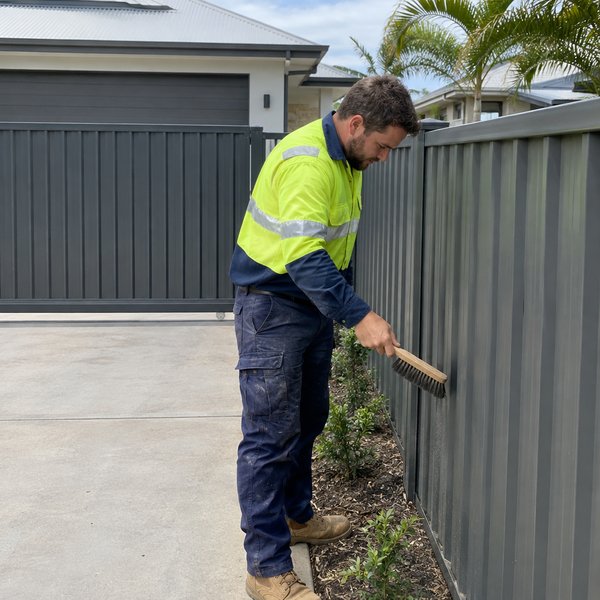
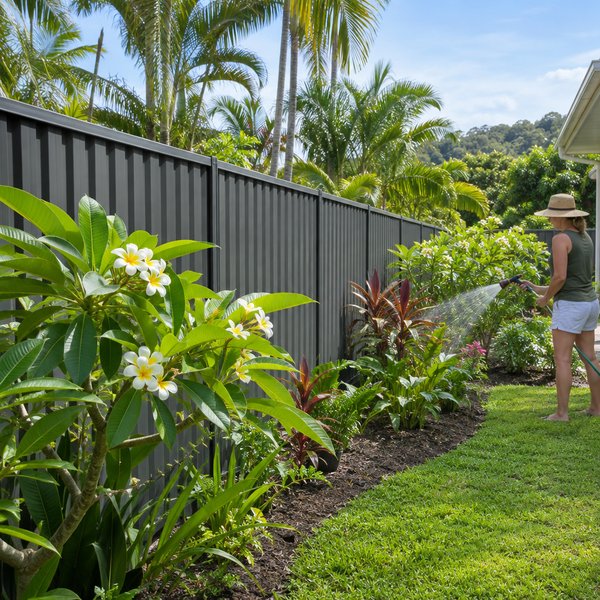
A low-maintenance fence that handles humidity, storms and salt air better than timber.
Unlike timber palings, steel sheets won't rot, warp or get eaten by termites in our warm, damp climate. You won't be replacing split palings or propping up a leaning fence every few years. A rinse with the hose now and then keeps the finish looking fresh.
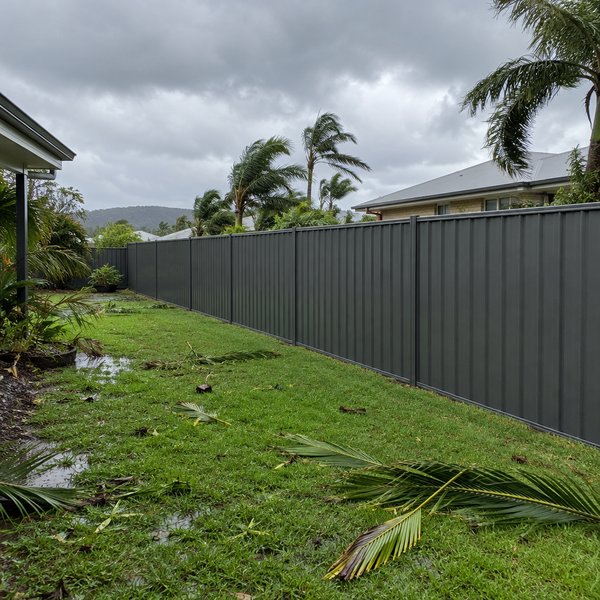
Solid steel catches the wind, so a fence with shallow footings can lean or fall in a big summer storm. Setting the posts for your soil and wind exposure helps the fence stay upright when storms roll through. That means less clean-up and fewer repair bills after storm season.
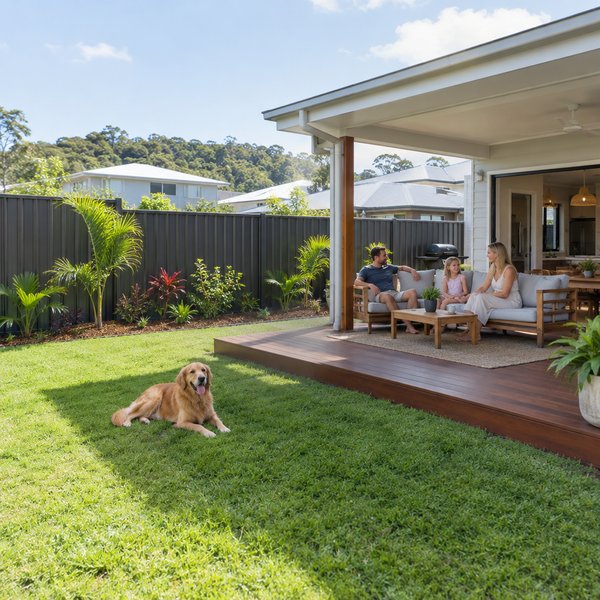
A full-height steel fence blocks sightlines from neighbours and the street, which suits families, pets and anyone with a pool or outdoor entertaining area. It also keeps the yard secure for holiday homes and rentals that sit empty at times. In growth estates, a neat fence in the approved colour helps the whole street look finished.
Sandy coastal lots, clay in the hinterland and rocky slopes all need different footings. We look at your ground and wind exposure before deciding on post depth and spacing. That's what keeps a steel fence straight through storm season.
Steel filings left on a new fence rust within days in our humidity and leave orange stains on the paint. We cut carefully, treat cut edges and clean every panel before we leave. It's a small step that protects the finish for years.
Many new estates set rules on fence colour, height and where fencing can sit at the front. We help you check those guidelines and talk through sharing the cost with neighbours. That way your fence goes up once and doesn't need changing later.
We build matching Colorbond gates, so the colour and finish line up across the whole boundary. We also repair storm-damaged panels and rails, and we can fit aluminium slat or timber sections where you want a different look out the front. You deal with one team from start to finish.
Common questions answered
It depends on the length of the fence, whether an old fence needs removing, how sloped or rocky the ground is and how many gates are involved. Concrete footings also need time to cure before panels go in, and heavy rain can push digging back a day or so. We'll give you a realistic timeframe for your site when we quote.
The main factors are total length, fence height, the sheet profile and steel grade, and whether your block needs stepped panels or sleeper plinths. Removing an old fence, tricky access, rock in the ground and adding gates all change the price too. If it's a dividing fence, the cost is often shared with your neighbour, so it's worth talking to them early.
Salt air is harder on any steel, so for beachside properties we talk through sheet options suited to marine exposure. Most rust problems we see come from leftover swarf, soil piled against the bottom rail or areas that rain never rinses. Hosing the fence down with fresh water every so often and keeping garden beds off the panels makes a big difference.
Queensland's dividing fence laws generally expect neighbours to share the cost of a sufficient fence, and there's a formal notice process if you can't agree. Standard-height boundary fences usually don't need council approval, but taller fences, fences on top of retaining walls and some estate covenants have extra rules. We can help you check your estate guidelines for approved colours and heights before we start.
Wash it down with a garden hose and a soft brush, using mild soap if there's mould or grime building up in shady spots. Avoid abrasive cleaners and don't blast it close-up with a pressure washer. Keep mulch, soil and sprinkler spray off the bottom of the sheets, and check the fence after big storms so a loose rail or bent panel can be fixed early.
We provide Colorbond Fencing throughout the Sunshine Coast, QLD and surrounding suburbs.
Don't see your area? Contact us to check if we service your location!
View All Areas